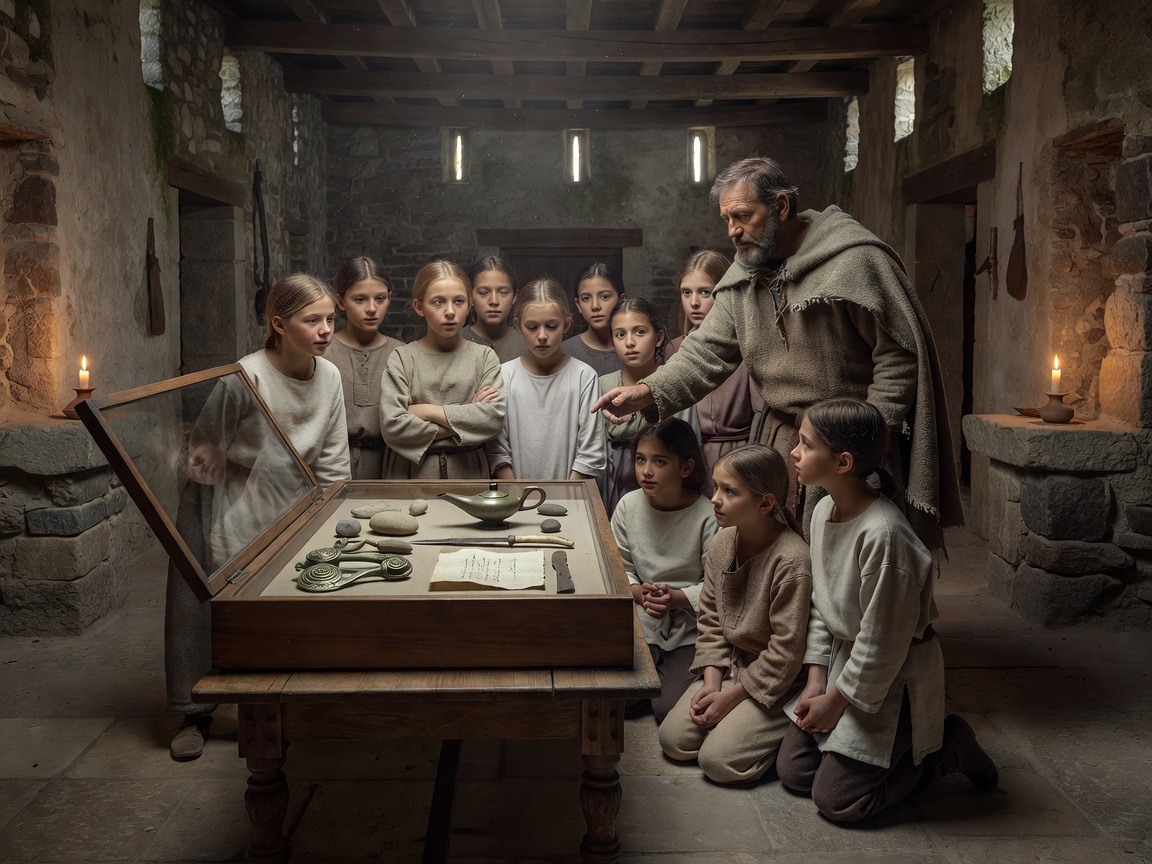
A school visit works best when its purpose is clear before the group arrives. Identify the subject or skill to explore, the ages involved and what pupils already know. Museum programs vary: a guided gallery visit may focus on discussion, while a workshop may reserve time for making. Neither format suits every class or timetable.
Match the format to the objective
Guided visits provide a facilitated route through selected displays. They can support close looking and shared discussion, but the pace and route are usually set by the session plan. Ask how much time pupils spend speaking, observing and moving, and whether the guide adapts language for the age group.
Self-guided visits let teachers set the route and pace. They offer flexibility for classes with specific interests, but place more planning and interpretation work on the accompanying adults. Check whether the museum provides maps, activity sheets, handling guidance or group gathering points.
Workshop formats usually include a defined activity, such as drawing, making or structured object study. Ask about materials, room arrangements and whether the activity links to the collection. A mixed classroom/gallery program combines facilitated work indoors with time in the galleries. It can reduce transitions between separate learning tasks, but often needs a longer visit window and careful movement planning.
Plan for age, time and group management
Age bands are a starting point, not a substitute for checking the group’s reading, communication and attention needs. Request the stated age range and learning objectives. Clarify whether one session is designed for a whole class or a smaller group, how adults participate, and what happens if the group arrives late.
Session duration should include more than teaching time. Allow for arrival, coats, toilets, regrouping, transitions and a calm departure. Ask whether the published duration includes a break and whether the group can eat elsewhere on site. Confirm adult-to-child supervision expectations directly; do not assume the museum supplies classroom-style supervision.
Before travel, share practical information with accompanying adults. Agree a meeting point, head count routine, boundaries, and a plan for pupils who need time away from the group. Check transport access, storage, photography rules and any object-handling restrictions. A concise pre-visit briefing can make gallery expectations easier to explain.
Prepare in class and follow up
Pre-visit preparation can be simple: introduce a theme, examine a related image, or practise describing an object without guessing its story. Use resources supplied by the museum when available, and check whether they can be reproduced or shared. Avoid preparing pupils around details that may change, such as a temporary display, without confirming current information.
Afterwards, reconnect the visit to classroom work. Pupils might sort observations from interpretations, compare two objects, make a response or record a question to investigate. These are possible follow-up approaches, not guaranteed outcomes. Educator resources may include printable prompts, vocabulary, collection information or planning notes; ask what is available and in what format.
Access and practical fit
Tell the museum about relevant access requirements in advance, with the group’s permission and without sharing unnecessary personal details. Ask about step-free routes, seating, quiet spaces, communication support, sensory conditions and accessible learning materials. Features vary by site and program. Confirm what applies to the planned route, not only to the building generally.
GOOD FOR
Curriculum-linked enquiry, first visits, focused collection study and classes that benefit from a defined learning structure. The right choice depends on the topic, ages, timetable and support available.
WHAT TO CHECK
- Age range, learning objectives and session length.
- Group size, adult supervision and late-arrival arrangements.
- Pre-visit resources, materials, access details and follow-up options.
- Whether the visit includes galleries, a learning room, or both.
TRADE-OFFS
Facilitated sessions reduce teacher planning but may limit route flexibility. Self-guided visits allow choice but require more preparation. Workshops add a practical task and may need more time, materials or a separate room. Mixed formats cover several modes but can make transitions and scheduling more complex. Compare the actual session outline rather than relying on the format label alone.
For family-focused approaches, see Family Museum Learning. For object enquiry, continue to Object-Based Museum Learning.